What is Japow?
By Kazu·
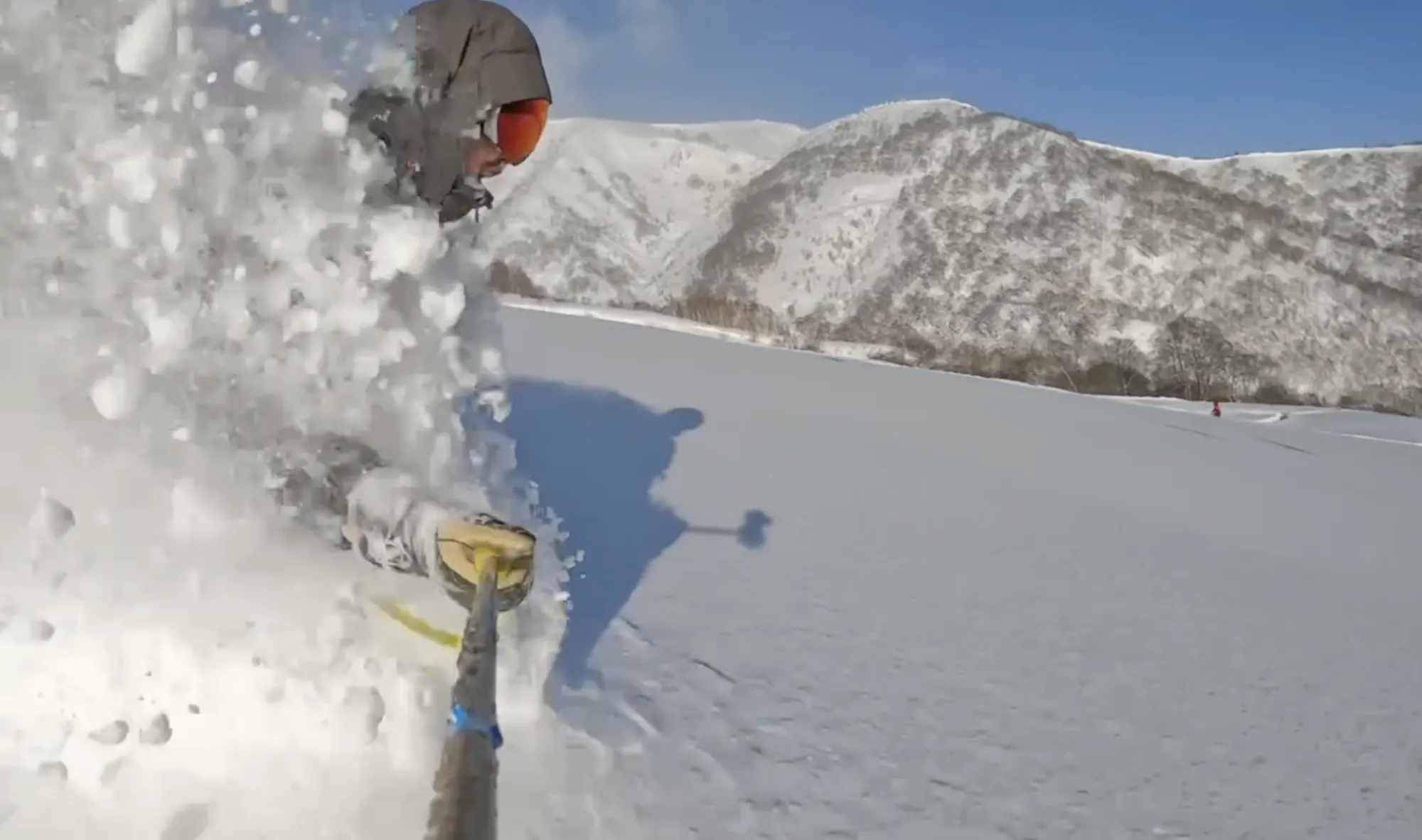
Japow is Japan + powder: the light, deep snow that falls on Japan's mountains every winter.
It's the word skiers around the world use for the kind of day you fly to Japan for.
I'm Kazu. I grew up in Fukuoka Prefecture, on the southern island of Kyushu, and fell for powder in the late '90s. These days I live in Tokyo, work a day job, and chase this snow about 30 days a season. With limited days off, there's one question I ask every morning: where is it Japow today? I built Japow Now! to answer it.
How a skier from Kyushu found powder
I first learned that powder snow was a thing at Niseko Hirafu in the mid-'90s. I took the ferry from Oarai, Ibaraki, up to Hokkaido. It was mid-March and I wasn't much of a skier yet, but I jumped in the mogul runs and ducked off the groomers into the powder. Things were a lot more relaxed back then.
In the late '90s, freeskiing was just taking off, and mogul skiing was the coolest thing on snow. The Salomon 1080 was sold as a ski that could go anywhere, bumps or fresh snow, and it was wide for its time. That ski is how I found out that riding powder was a style of its own.
I got properly hooked in the early 2000s. I heard there was great powder at Hachimantai, up in Tohoku, so with my first bonus I bought a used Subaru Legacy for about 200,000 yen and drove more than ten hours to ski there. The resort is gone now, but that's when I started paying attention to the snow itself.
I wrote about Japow ten years ago
In March 2016, I wrote a Japanese article called “Do you know Japow?” Skiers from overseas had been a common sight in Niseko since the early 2010s, and by then it felt like there were more Australians on the hill than Japanese. Instagram was full of #japow, but most people in Japan had never heard the word.
Ten years later, skiers from overseas have spread from Niseko to Hakuba and ski areas all over Japan, and a Niseko lift ticket costs twice what it did. It's been a long time since my first trip to Niseko, and these days I never miss a season. Climate change is real, but some things haven't changed: that snow, and those slopes. Not just the big face off Annupuri, but Hirafu's Super Course and the Ohiroma bowl beside it, which you can ride under the night lights.
Why Japan gets so much snow
In winter, Japan sits under a classic pressure pattern: high to the west, low to the east. Japanese people call it seiko-toutei (“high in the west, low in the east”) or simply fuyugata, “the winter pattern,” and when the forecast says fuyugata, skiers start packing. Under it, cold, dry northwesterly air flows out of Siberia. The Sea of Japan is warmed by a warm current (the Tsushima Current), so even in winter the water is relatively mild. Crossing it, the air picks up loads of moisture and dumps it as snow on Japan's mountains. Near the coast the snow is heavier and wetter, but the farther inland it goes, the lighter and drier it gets. Niseko Annupuri, for example, isn't far from the sea, but it sits at the eastern end of the Niseko range, so the powder comes out just right. And it keeps coming, storm after storm. Sukayu in Aomori once measured 566 cm of snow on the ground (February 26, 2013, Japan Meteorological Agency).
On the biggest days you'll often hear about the JPCZ (Japan Sea Polar Air Mass Convergence Zone). The cold air splits around the mountains at the top of the Korean Peninsula, then collides again over the Sea of Japan, forming a narrow band of snow clouds. Wherever that band parks, it dumps a lot of snow in a short time.
The deepest months are mid-December to February, on the Sea of Japan side: Hokkaido, Tohoku, Niigata and Nagano.
Where you go changes the snow
The same winter pattern brings different snow to different places.
- Hokkaido: it's cold, so the snow is light and dry. Niseko and the Sapporo area get loads of it straight off the Sea of Japan, and inland around Asahikawa and Furano it gets even lighter.
- Tohoku: Hakkoda, Geto and Zao are among the snowiest places in Japan. Sukayu, with its 566 cm record, is here too.
- Niigata and Myoko: close to the Sea of Japan, with some of the biggest snowfall totals in the country. Being near the coast, the snow can be a little heavier, but when the JPCZ parks overhead it piles up overnight.
- Nagano (Hakuba, Shiga Kogen, Nozawa): further inland and higher than Niigata, so the snow is lighter. The high-altitude resorts hold their snow well into spring.
Japow by the numbers
We rate powder by how much fell in the last 24 hours.
| Level | New snow in 24 h | What it means |
|---|---|---|
| MINI POW | 5 cm+ | Worth the first chair |
| JAPOW | 15 cm+ | A classic Japanese powder day |
| DEEP POW | 50 cm+ | A handful of jackpot days a season |
“Do-POW” (ドパウ, do-pow) is slang Japanese skiers and snowboarders use for a day when it absolutely dumps. The “do” (ド) is a Japanese prefix that turns things up to the max. Most people in Japan wouldn't know the word, but they'd get it the moment they heard it. On this site, 50 cm or more in 24 hours is DEEP POW. On those days, our logo turns into “ドPOW NOW!”
In the 2025-26 season, somewhere in Japan hit DEEP POW on 13 days (JMA stations). Every one of them came between November and January, none after. That season, at least, the biggest dumps came early.
Biggest single-day snowfalls, 2025-26 season (JMA AMeDAS)
| Date | Station | Snow in one day | Nearby resort |
|---|---|---|---|
| Nov 18 | Sukayu (Aomori) | 76 cm | Hakkoda |
| Dec 31 | Hijiori (Yamagata) | 70 cm | Gassan |
* Days in the 2025-26 season when at least one JMA AMeDAS station in Japan recorded 50 cm or more of snowfall in a calendar day. The table lists the same season's biggest calendar-day totals.
Beyond Niseko: the lines I keep going back to
Niseko is famous for a reason, but Japow is everywhere on the Sea of Japan side. I do go into the backcountry, but on a short day I want laps, so my favorites are easy to reach from a lift or ropeway.
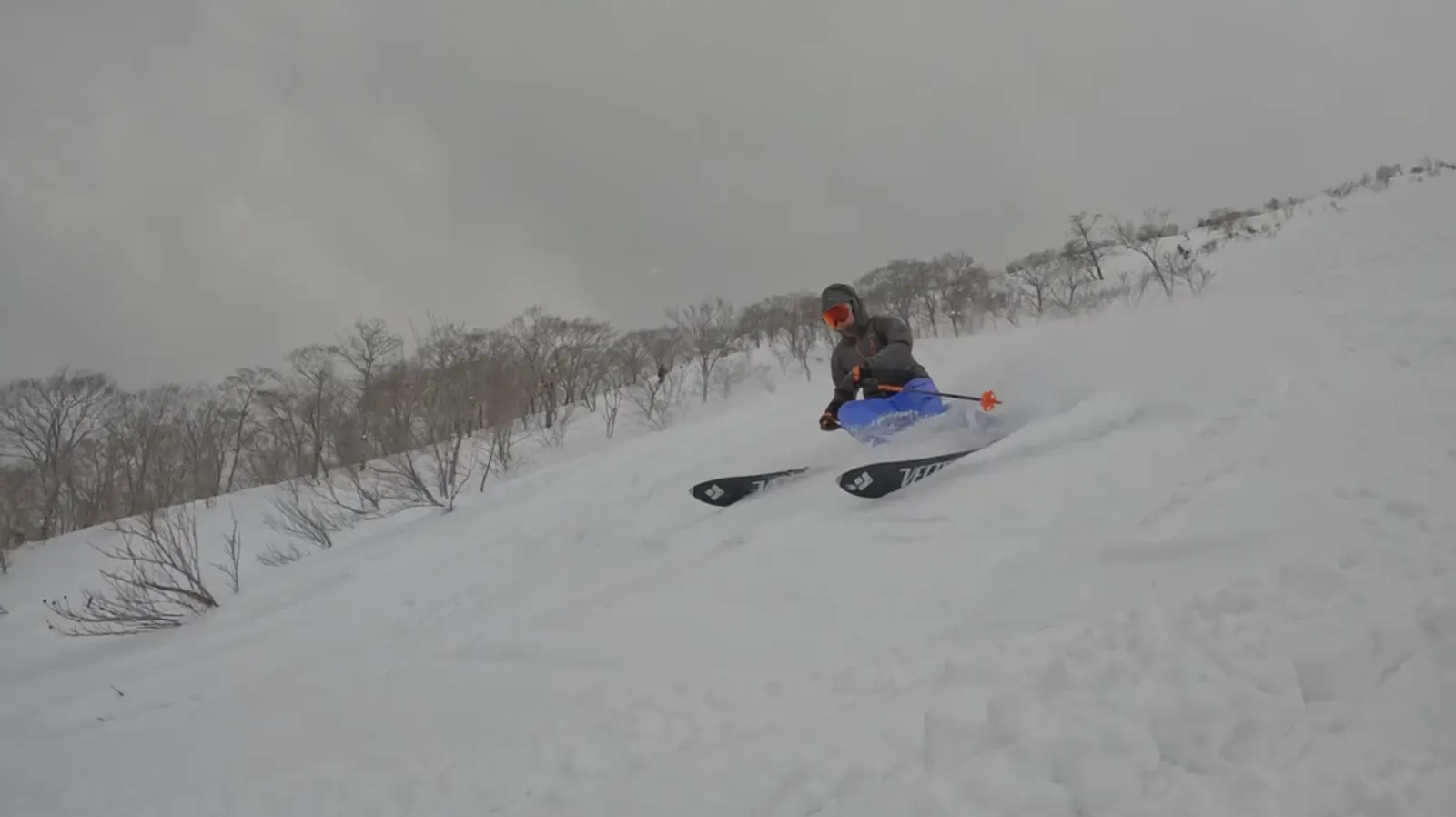
- Niseko Annupuri, Fujiwara-no-sawa to the East Ridge (Hokkaido): one huge face straight off the summit. I don't know anywhere else in Japan where you can ride that much top-quality powder, that far, relatively safely, several times in one day. And when you're done, you can keep skiing the resort under the lights until night. It ruined my life, in the best way.
- Teine's gullies (Sapporo, Hokkaido): a row of gullies the locals just call by number, No. 1, No. 2, No. 3. A gate at the top of Teine Highland lets you into them as sidecountry, and the old men's giant slalom course from the 1972 Sapporo Olympics is in there too. You rarely find terrain this steep and this long anywhere else in Japan. North-facing, in Hokkaido: the snow is as good as it gets. The locals say there's more beyond.
- Hakkoda (Aomori): the ropeway does most of the climbing for you, and from there about an hour of hiking gets you near the summit without heading deep into the forest. There are several routes; the best known are Hokibadai and the Statue (Dozo) course. The catch: you need a car to get back to the ropeway at the end. Great in midwinter, and just as much fun for spring skiing.
- Kagura, the south face of Naka-one ridge (Niigata): what makes Kagura's backcountry special is how easy it is to get in from the resort, and back out again. About an hour of hiking opens up several routes: Naka-one, its south and north faces, and the Hanshaban (reflector). My favorite is the south face of Naka-one, because it drops you right back at the resort. Take a few first-chair laps on the groomers, go out for a lap (just under two hours), then either hike again or stay on the slopes. It's high, so spring is good too. My last day of the season is usually the week after Golden Week.
- Happo-one's gullies (Hakuba, Nagano): ride the lifts to the top of the resort, hike the ridge for a little over an hour, and you can pick from a whole set of gullies. You get to spend all that lift-served vertical in the backcountry, and it's steep. The catch: whichever line you choose, it doesn't bring you back to the resort, and getting home is a slog. Which is why, honestly, I've only been once.
The day I'll never forget
My first day in the backcountry, at Kagura in Niigata. It was probably April. I didn't own skins, so I bootpacked up. I had a backcountry pack full of food and drinks, and I ate a cup of instant ramen on the summit. That's how it was back then. These days I go in fully equipped, but that summit is still the day I remember most. That day, I opened a door I could never close again.
How I find it
- Two weeks out: forecasts now reach about two weeks ahead, so start reading when and where the cold air might hit (on Honshu, usually Hakuba, Myoko, Shiga Kogen, Yuzawa or Gunma)
- The night before: narrow it down with the forecast
- In the morning: confirm with 24-hour snowfall and the live cams
- Let it come to you: star your favorite resorts and get an alert on mornings they get fresh snow
My rule: finish work in Tokyo, head home, and leave that night. Drive through the night and you're in the mountains of Honshu, Japan's main island, by early morning. So the real call happens on the way home from the office: where am I going tonight? That one decision is how a day job and Japow fit in the same life.
The end of December often brings a big cold snap. So every year-end I loop from Hakuba through Takada in Joetsu to Myoko and Nozawa, picking whichever spot got the most snow that day.
Hokkaido is a flight away. I land, pick up a rental car (I use Times) at the airport or in town, and head for wherever got the most snow that day.
My skis
I ride Vector Glide, a Japanese ski brand that builds skis for Japanese snow. Every video on my YouTube channel “Japow Now” is on them. Outside skiing, hardly anyone has heard of it, but it's been around since 2003 and made it through the long, hard years after Japan's ski boom faded, still committed to making its skis in Japan. Rather than picking one ski to match your style, the fun is that each model rides completely differently: the GENIUS lets you carve powder like a snowboarder, the CORDOVA can be charged hard on the groomers and in the backcountry, and the POLARVE is fat enough for powder but still carves. I pick the ski for the slope and the snow that day.
NISEKO JAPOW in February 2025|4 Days of Pure Powder
Where is it snowing right now?
New snow, snow depth and live cams for 302 Japanese ski resorts, updated as often as every 10 minutes.
FAQ
- How do you say it?
- “JAH-pow” (rhymes with “wow”)
- Is Japow a place?
- No. It means powder snow in Japan, not one resort
- When should I book a Japow trip?
- Mid-December to February is the safest bet. Early season can bring big dumps too, but the base is thinner